

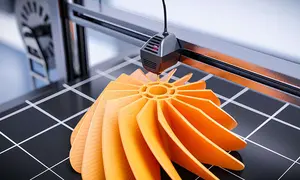

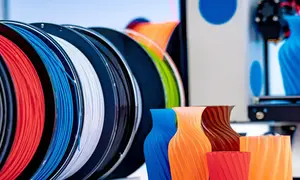

As the global 3D printing industry continues to expand, PETG (Polyethylene Terephthalate Glycol) resin has become one of the most important materials for FDM/FFF filament production. Combining the ease of printing associated with PLA and the durability of ABS, PETG offers an excellent balance of strength, toughness, chemical resistance, and dimensional stability, making it increasingly popular among both professional users and hobbyists.
Current Market Situation
In recent years, demand for PETG filament has grown steadily across industries such as consumer products, automotive prototyping, electronics, and functional engineering parts. The rapid adoption of desktop 3D printers and the development of high-speed printing technologies have further accelerated the use of PETG resin in filament manufacturing.
Compared with traditional materials, PETG provides several advantages:
l Excellent layer adhesion and impact resistance
l Low warpage and minimal shrinkage during printing
l Good transparency and surface finish
l Better heat and chemical resistance than PLA
l Suitable for both indoor and outdoor applications
As a result, many filament manufacturers are expanding their PETG product portfolios, including high-speed PETG, reinforced PETG, and specialty color formulations. The global 3D printing filament market is expected to maintain strong double-digit growth in the coming years, with PETG remaining one of the key material categories driving this expansion.
Future Trends
Looking ahead, PETG resin for 3D printing filament is expected to evolve in several important directions:
1. Higher Performance Materials
Modified PETG grades with improved mechanical strength, heat resistance, and faster printing capability will continue to emerge, enabling more demanding engineering applications.
2. Sustainability and Recycling
As environmental concerns grow, recyclable and recycled PETG materials are gaining attention. The industry is actively exploring circular manufacturing solutions and eco-friendly filament production.
3. Industrial Applications
PETG is increasingly being adopted for functional prototypes, tooling, and low-volume production parts due to its balanced performance and cost-effectiveness.
4. Smart and Specialty Filaments
The market is witnessing growing demand for carbon-fiber-filled, flame-retardant, anti-static, and other customized PETG filaments tailored to specific industries.
Conclusion
PETG resin has established itself as one of the most versatile materials in the 3D printing industry. With continuous improvements in material technology and increasing demand for functional and sustainable applications, PETG filament is expected to play an even more significant role in the future of additive manufacturing. For resin producers and filament manufacturers, investing in high-quality PETG materials and innovative formulations will create new opportunities in this rapidly expanding market.