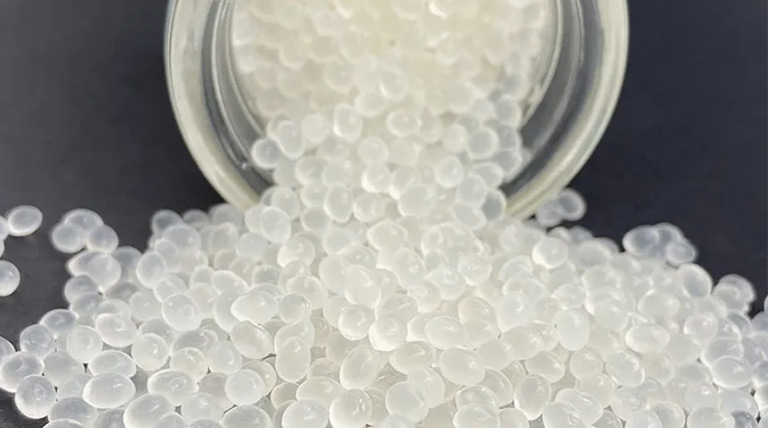




Driven by global decarbonization efforts and tightening "anti-plastic" policies, PLA (Polylactic Acid) is no longer just an alternative to traditional plastics. It has become a strategic pivot point in the food packaging sector for achieving both high performance and a low carbon footprint.
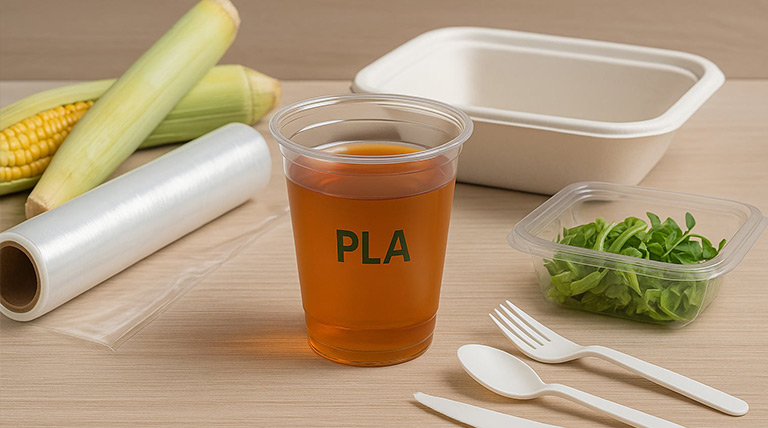
As a semi-crystalline thermoplastic polyester, PLA resin exhibits superior material properties in applications ranging from cutlery (injection molding) to containers (thermoforming):
1. Mechanical Performance & Modulus Advantage
In cutlery manufacturing (e.g., high-quality forks and knives), PLA demonstrates extremely high tensile strength and flexural modulus.
High Rigidity: Compared to traditional Polystyrene (PS), PLA offers a more solid grip feel and superior resistance to breakage.
Structural Integrity: Its high modulus characteristics ensure excellent dimensional stability during automated production and high-density packaging processes.
2. Optical & Surface Properties
For disposable food containers (such as takeaway boxes), PLA provides industry-leading transparency and surface gloss.
Low Haze: PLA offers excellent refractive index matching, achieving glass-like visual clarity that enhances the perceived market value of the fresh food inside.
High Surface Energy: Compared to polyolefins, PLA has better printability, allowing for precise brand messaging without the need for surface treatment.
3. Processing Versatility
PLA resin exhibits a wide processing window, seamlessly integrating with mainstream manufacturing techniques:
Precision Injection Molding: By optimizing Melt Flow Index (MFI), it ensures consistent mold filling for cutlery with complex geometries and shortens cycle times.
Sheet Extrusion & Thermoforming: PLA grades specifically designed for container production offer superior melt strength, achieving more uniform wall thickness distribution.
4. Decarbonization & Compliance Framework
As ESG strategies become central to corporate competitiveness, PLA provides a clear pathway to decarbonization:
Carbon Footprint Reduction: Compared to fossil-based polymers, PLA can reduce greenhouse gas emissions by approximately 60%-80% in the "cradle-to-gate" process.
Authoritative Certification Support: Compliant with ASTM D6400 (USA) and EN 13432 (EU) industrial composting standards, facilitating rapid global market access for green brands.