

PETG resin is a popular 3D printing material known for its excellent weather resistance. Compared with PLA, PETG is much better suited for outdoor applications. However, its actual service life depends on factors such as UV exposure, temperature, humidity, and mechanical load.
Environment | Expected Service Life |
Indoor use | 5–10+ years |
Semi-outdoor (shaded, limited rain exposure) | 3–5 years |
General outdoor conditions | 2–5 years |
High UV regions (e.g., the Middle East, Africa, Australia) | 1–3 years |
Continuous sun exposure, high temperatures, and heavy mechanical loads | 6 months–2 years |
How to Extend the Outdoor Lifespan of PETG Prints
1. Choose UV-Stabilized PETG
Some PETG filaments are specifically formulated for outdoor applications, such as:
· UV Resistant PETG
· Outdoor Grade PETG
· Weatherable PETG
These materials can increase outdoor service life by 30%–100%.
2. Apply a UV-Protective Coating
Protective surface coatings can significantly improve weather resistance, including:
· Polyurethane (PU) clear coat
· Automotive UV-resistant clear coat
· Acrylic UV protective coating
With proper coating, PETG parts can often achieve an outdoor lifespan of 5 years or more.
3. Increase Wall Thickness
For improved durability, consider:
· Wall thickness: ≥ 2.0 mm
· Infill density: ≥ 30%
A thicker structure helps maintain strength even after years of weathering.
4. Use Light-Colored Filaments
In general, weather resistance follows this trend:
White > Gray > Blue > Red > Black
Lighter colors absorb less heat, reducing thermal stress and slowing down aging.
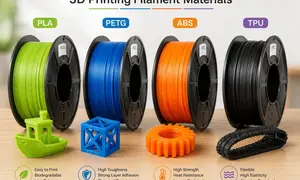
Outdoor Durability Comparison of Common 3D Printing Materials
Material | Typical Outdoor Lifespan | UV Resistance |
PLA | 6 months–2 years | ★★☆☆☆ |
PETG | 2–5 years | ★★★★☆ |
ABS | 2–4 years | ★★★☆☆ |
ASA | 5–10 years | ★★★★★ |
PC | 3–8 years | ★★★★☆ |
PA (Nylon) | 2–5 years | ★★★☆☆ |
Among these materials, ASA is widely recognized as the best choice for long-term outdoor FDM applications due to its outstanding UV and weather resistance.